The Gear
THE JULIUS-K9 IDC POWERHARNESS
One harness rides on the truck for every dog we condition - the Julius-K9 IDC Powerharness. Here is what it is, why it earns that spot, and how we fit it before a single slat moves.
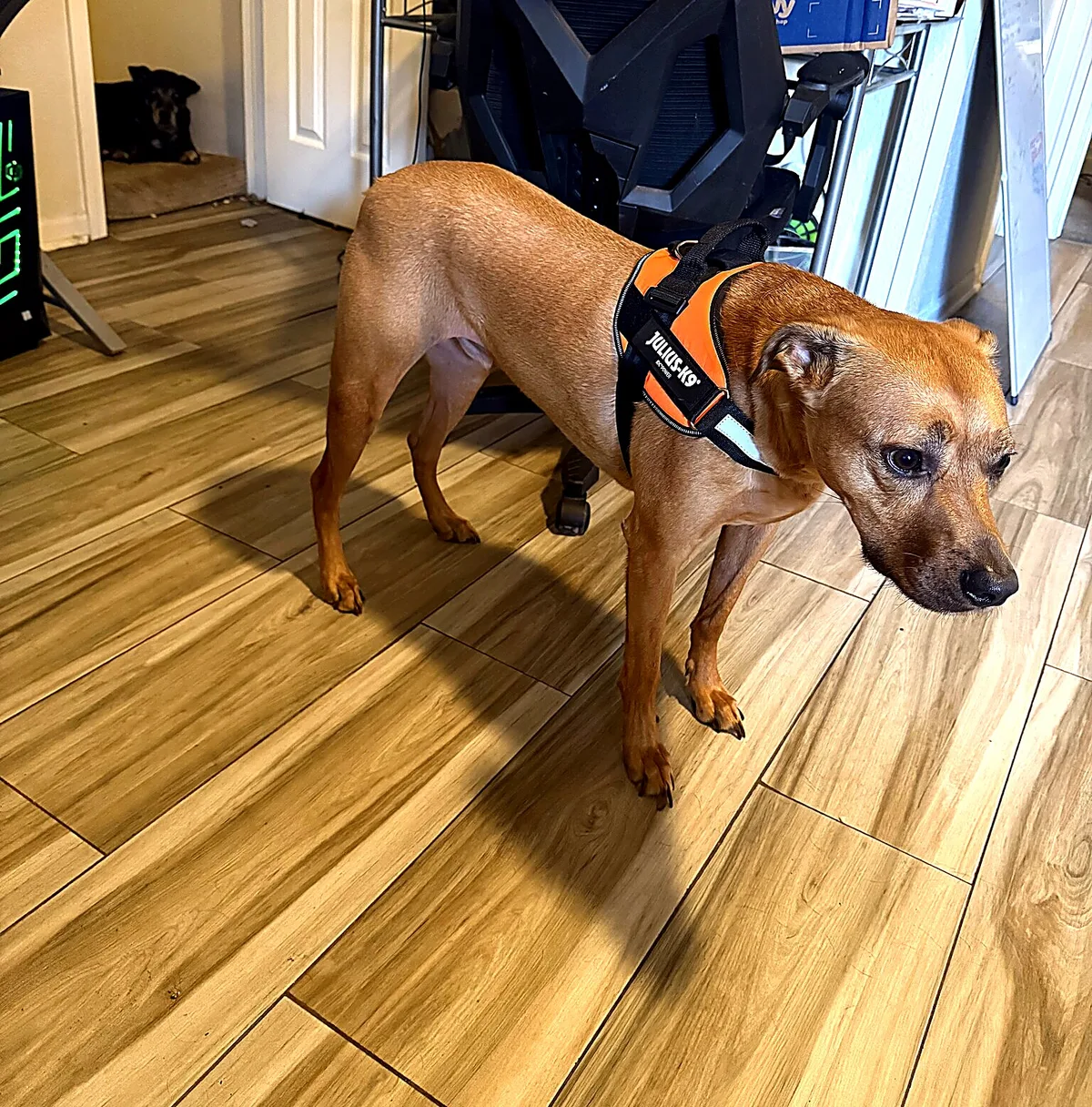
Quick facts
- Made by
- Julius-K9 - a Hungarian family company, established 1997
- IDC means
- Innova Dog Comfort
- Load path
- Across the chest and sternum - not the throat
- Sizes
- Nine, from Baby 1 to size 4 (roughly 2 to 198 lbs)
- On our truck
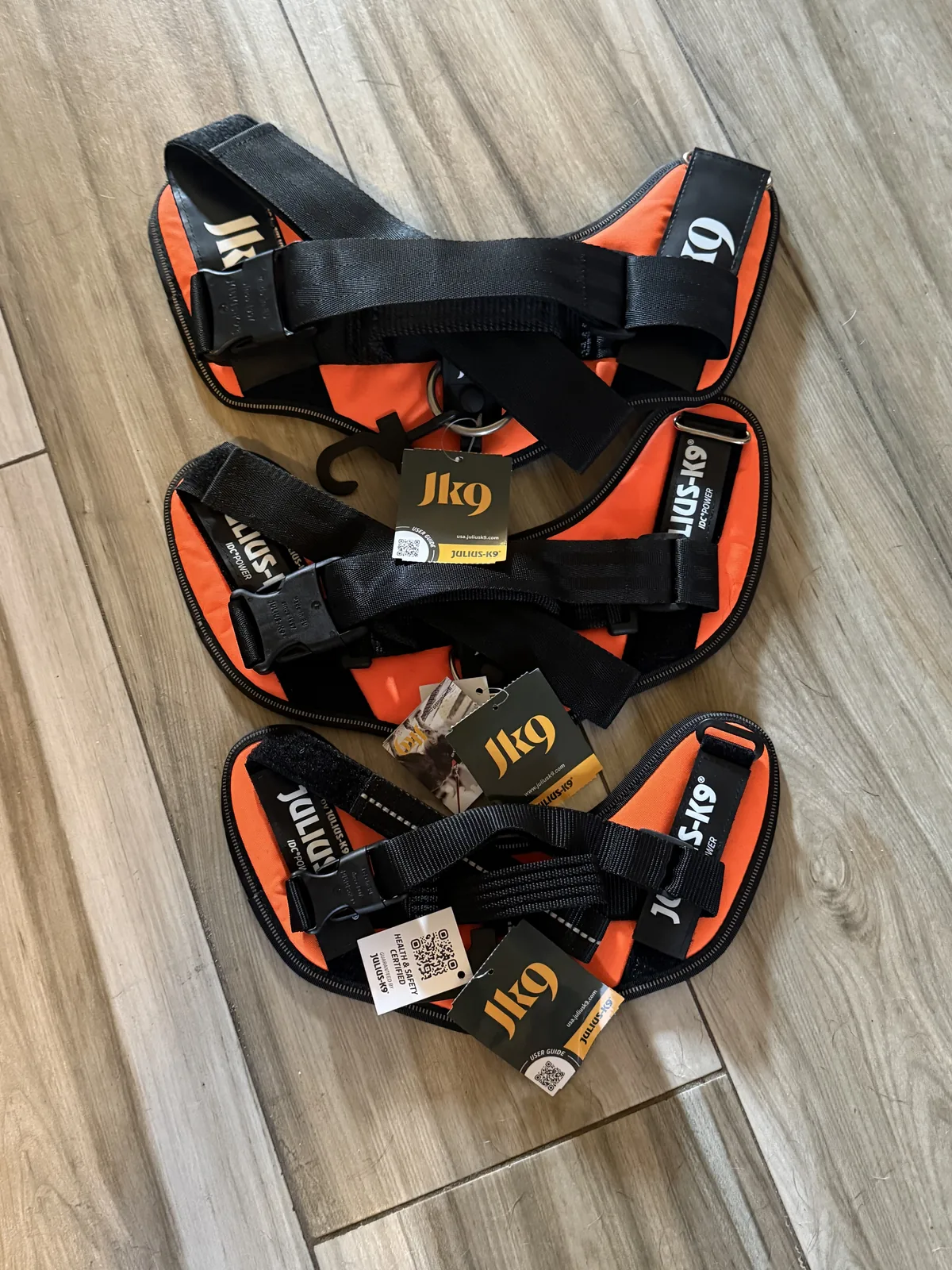
- Small, medium, and large
- Standouts
- Spine-protecting saddle, lockable handle, reflective edges, one-click fit
What is the Julius-K9 IDC Powerharness
The Julius-K9 IDC Powerharness is a chest-loading dog harness built by Julius-K9, a Hungarian company whose gear was adopted by police and military dog units before it ever reached pet owners. IDC stands for Innova Dog Comfort. The design does one thing that matters for conditioning above all else - it moves the force of a leash or tether off the neck and spreads it across the chest and sternum, so a dog can pull, lean, and drive without loading the throat.
For a business like ours, that is not a nice-to-have. Kai's Run is private, one-on-one mobile conditioning on a self-powered slatmill - the dog drives the belt with its own stride while clipped to a safety tether. Every session puts sustained, self-selected effort through whatever the dog is wearing. The harness is the interface between the dog and the work, so it gets the same scrutiny as the mill itself.
Why we run it on every dog
We standardized on the IDC because the hardware is proven under working-dog loads. Julius-K9 describes a “hook-and-loop adjustable length chest harness” engineered for “excellent force distribution,” and the chest strap is built to carry the pressure line of the leash forward “with almost no interruption.” In plain terms - when a dog leans into the tether, the harness turns that pull into broad pressure across the chest instead of a point load somewhere it should not be.
The body of the harness is a saddle-shaped piece Julius-K9 says “protects the dog's spinal cord and sensitive nerve tracts.” That saddle also sets where the harness rides, which is why fit is not optional - the size of the saddle determines the position on the dog. Get it right and the harness disappears into the work. Get it wrong and it rubs, shifts, or loads the wrong structure.
There is a working handle across the back that Julius-K9 calls a lockable feature useful when you “want to reduce the risk” and need to “easily stop your pet in an emergency.” On the mill, that handle is a control point. It is the difference between managing a dog that gets excited and chasing one.
How it is built
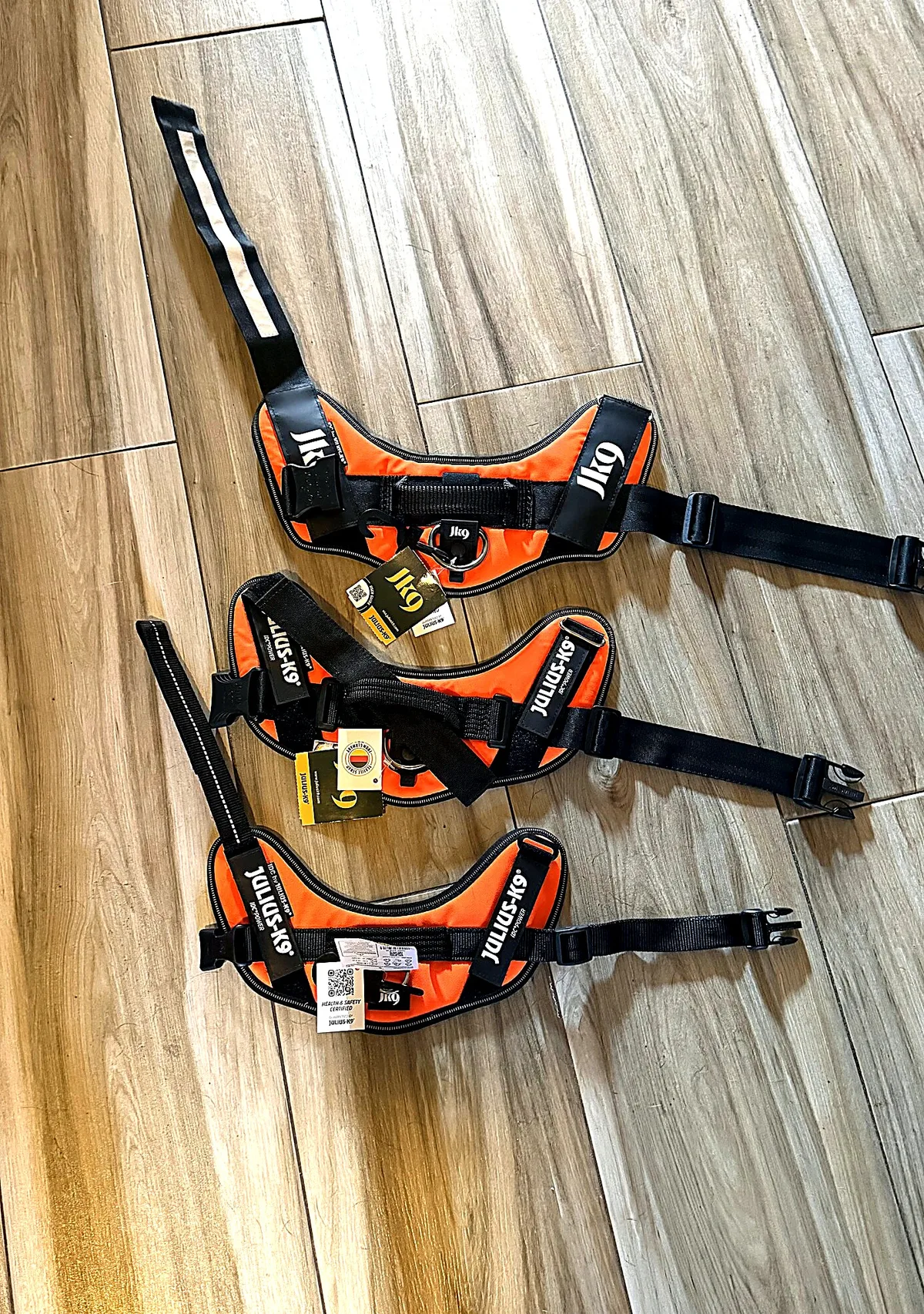
- Chest-strap force distribution. An adjustable chest strap carries the leash line forward and spreads load across the chest rather than the throat.
- Spine-protecting saddle. A saddle-shaped body Julius-K9 says protects the spinal cord and sensitive nerve tracts, and it sets where the harness rides.
- Lockable back handle. A handle for control and quick emergency stops - a real advantage next to a moving belt.
- One-click fit. Julius-K9 describes a “one-click solution” that puts the harness on in one motion, so setup stays fast and low-stress.
- Reflective edges. The chest-strap line and seams use reflective material so the dog is visible in low light.
- Nine sizes. From Baby 1 to size 4, roughly 2 to 198 pounds - the range covers nearly any dog we would condition.
- Interchangeable labels. Hook-and-loop side patches - a small thing, but it means the harness is quick to identify and set up per dog.
- Breathable, non-toxic material. The IDC uses Oeko-Tex certified fabric, tested to human-clothing standards.
Sizing the IDC - measure the chest, not the dog
The single most common IDC mistake is guessing the size off the dog's weight. Julius-K9 sizes by chest circumference - measured just behind the front legs, snug but not tight - and weight is only a rough cross-check. The saddle size also sets where the harness rides, so an accurate measurement is what keeps load on the chest instead of creeping toward the throat.
When two sizes overlap, we fit the dog rather than the number and adjust the chest strap from there. Here is the full official range so you know where your dog lands before we ever park.
| Size | Chest (in) | Chest (cm) | Weight |
|---|---|---|---|
| Baby 1 | 11.5 – 14 | 29 – 36 | 2 – 6.5 lbs |
| Baby 2 | 13 – 17.5 | 33 – 45 | 4.5 – 11 lbs |
| Mini-Mini | 15.5 – 20.5 | 40 – 53 | 9 – 15.5 lbs |
| Mini | 20 – 26.5 | 49 – 67 | 15.5 – 33 lbs |
| 0 | 23 – 30 | 58 – 76 | 31 – 55 lbs |
| 1 | 26 – 33.5 | 63 – 85 | 50.5 – 66 lbs |
| 2 | 28 – 37.5 | 71 – 96 | 61.5 – 88 lbs |
| 3 | 32.5 – 46.5 | 82 – 115 | 88 – 154 lbs |
| 4 | 38 – 54.5 | 96 – 138 | 154 – 198 lbs |
Source: Julius-K9 official IDC Powerharness size chart. The three sizes we keep on the truck cover the Mini through size 2 band - the majority of conditioning dogs.
Built for working dogs first
Julius-K9 started in 1997 as a Hungarian family business founded by Gyula “Julius” Sebő. By 1998 the company says its main users were “primarily police service dog units, military units and canine associations.” That order matters - the harness was engineered for handlers who put real load on gear every day, then reached pet owners after it had already earned trust in the field.
The scale backs it up. Julius-K9 marked its one-millionth harness sold in 2014 and says it protects “almost 50 technical solutions” across Hungarian and foreign patent offices. The IDC line has also collected mainstream design recognition - a Red Dot Award in 2019, and both the German Design Award and iF Design Award in 2020.
Independent testers back the working-dog reputation. Dog Gear Review notes the IDC is “used by Hungarian and Austrian police for a wide variety of working, sport and companion dogs” - the same design a patrol handler trusts is the one that ends up on your dog in the driveway. That is not marketing to us; it is the reason the gear earns its keep across hundreds of sessions instead of wearing out in a season.
That heritage is the reason we do not shop the harness aisle every season. We picked the tool working handlers already rely on and built our fit process around it - and we keep it simple so the dog never has to think about the equipment, only the work.
Why we buy genuine - and why you should too
That reputation cuts both ways. Julius-K9 is one of the most counterfeited names in dog gear, and the company is vocal about it for a reason. A knockoff can copy the orange color and the side-panel logo. It cannot copy the Oeko-Tex lining against the skin, the tested chest-strap load path, or the buckle built to the pressure Julius-K9 puts it through. On a slow leash walk a fake might get away with it - on working equipment, the point where it fails is the whole point of the gear.
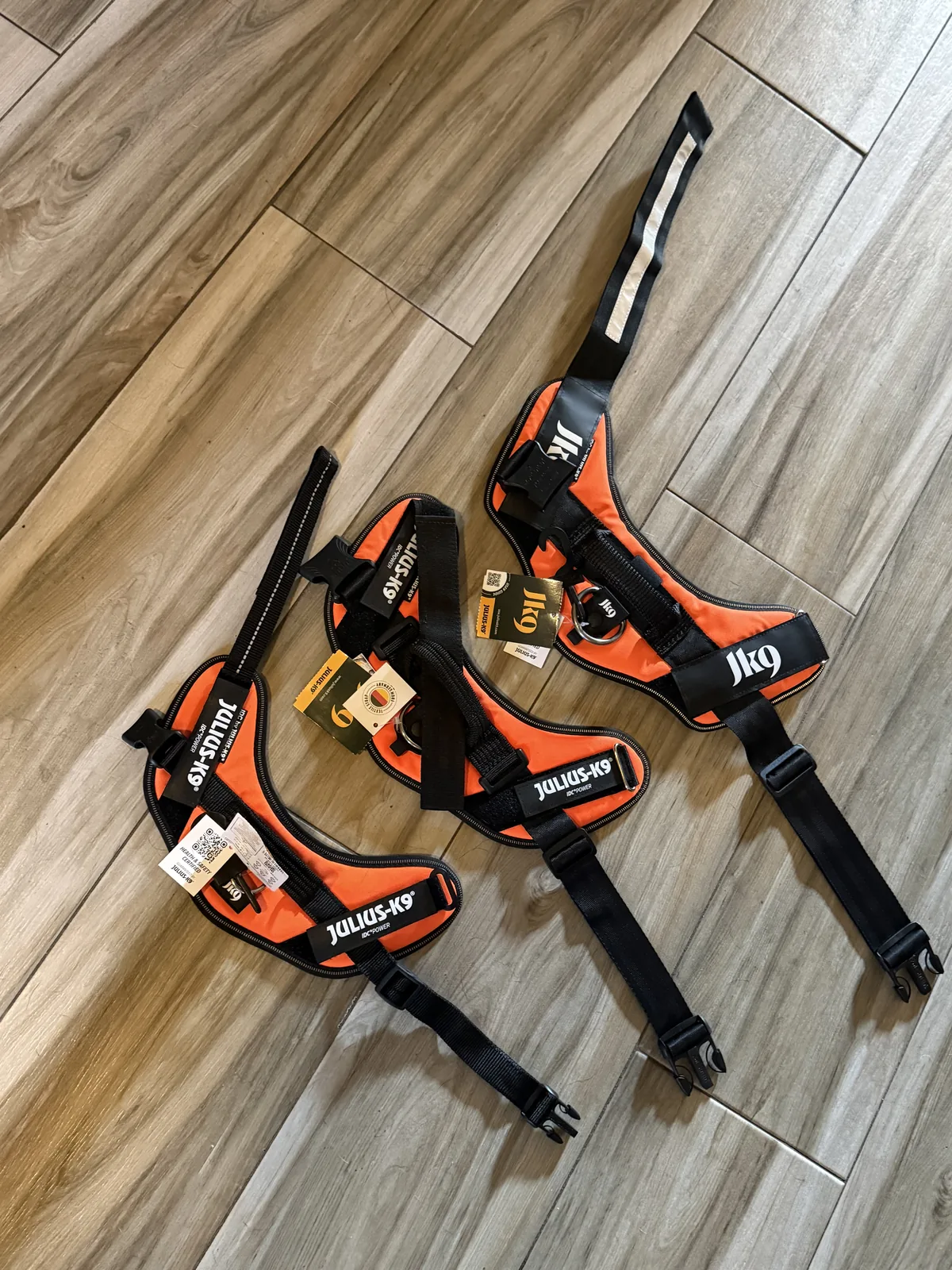
So every harness on our truck is the real thing - bought from an authorized source, certified hangtags and all. If you run a Julius-K9 on your own dog, the advice is simple: buy it from Julius-K9 or an authorized seller, and measure the chest before you order. The safety lives in the details you cannot see in a listing photo, and those are exactly the details a counterfeit skips.
This is a plain link to Amazon - Kai’s Run currently earns nothing from it. We only link gear we run on our own truck.
Whatever listing you land on, check for the certified hangtag and an authorized seller - and measure the chest before you order.
What independent reviewers say
We are not the only ones who rate it. Two independent reviews line up with what we see on the truck - and we include the honest caveats, because those matter more than the praise.
“This harness is probably the most famous Norwegian harness and for a reason. The quality material makes it easy to use, easy to clean, and it is also a durable one.”- Dog Gear Review
“I am most impressed with the handle on the back.” The same reviewer is candid about the limits - noting it “will still not be an escape-proof harness.”- Dog Gear Review
“The harness body is lined with a comfortable fabric, so when properly adjusted, it doesn't rub and cause sores … The buckles are strong enough to withstand pulling.” - Peggy Frezon, independent product review
“It was so much easier to keep Pete walking on when he really wanted to chase off after a squirrel … It also would be useful to help an older dog up the stairs or into a car.”- Peggy Frezon, independent product review
The escape-proof caveat is why we never rely on the harness alone. On the mill, every dog also clips to a safety tether - the harness distributes force and gives us the handle, and the tether is the backup. The harness is one piece of the same safety-first standard - a stocked canine first-aid kit rides on the truck for every session too.
How we fit it on the truck
We carry small, medium, and large - the common sizes cover the large majority of dogs from roughly 15 to 90 pounds. If your dog sits at the edge of the range, we confirm fit before the first session. We are not vets - so if your dog has any cardiac or respiratory history, we would rather you clear conditioning with your own before we start.
Fitting is a climbing-harness check, not a guess. No loose buckles, no twisted webbing, load on the chest rather than the throat. Then the harness clips to a safety tether on the mill - it does not pull or restrict, it just means that if a dog decides to bail sideways, nothing bad happens. We walk through the whole first-session sequence in what to expect from a first slatmill session.
Prefer your own gear? Bring it. We assess any harness your dog already trusts against the same standard and only swap to our IDC if the fit will not distribute force safely for sustained running.
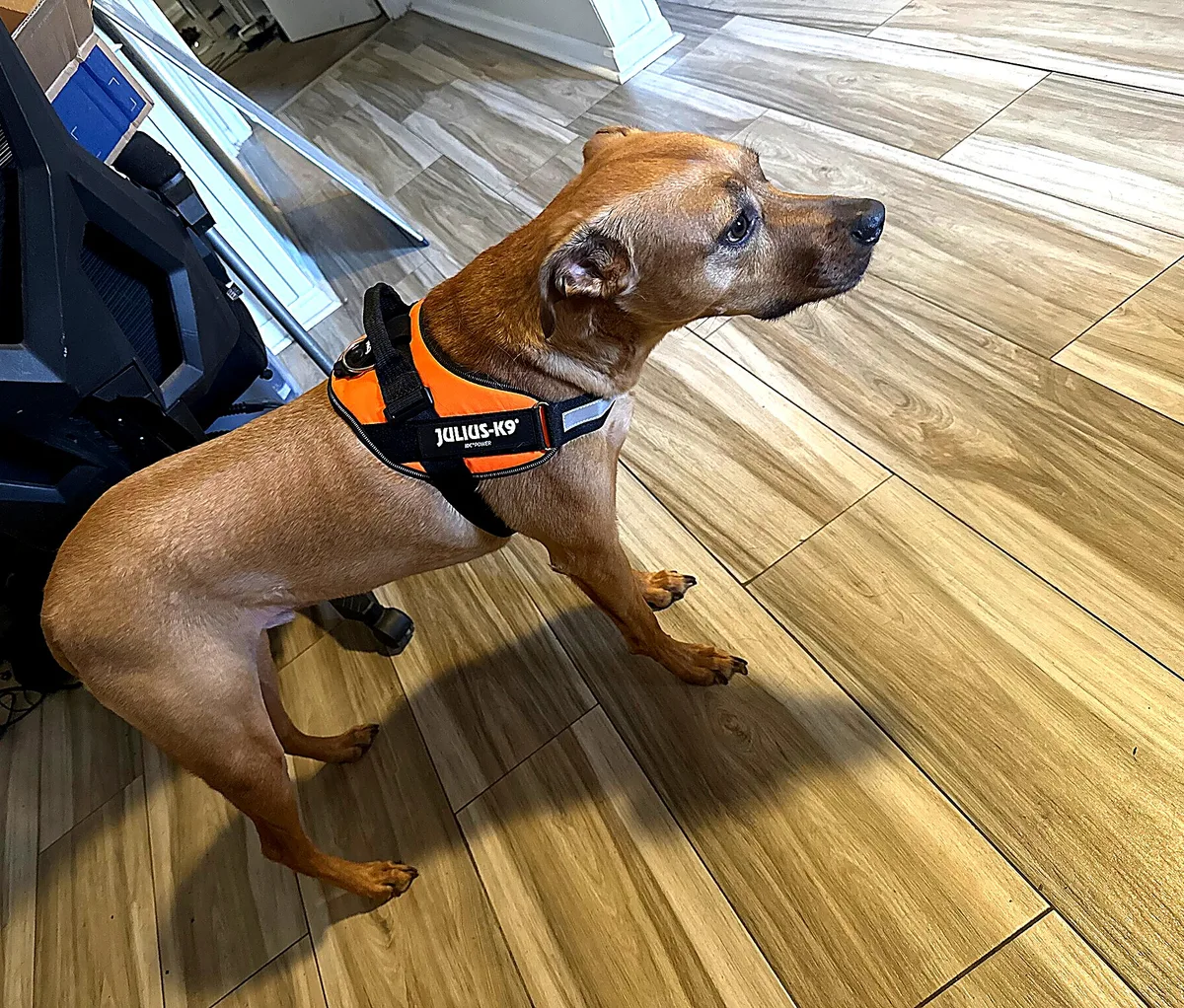
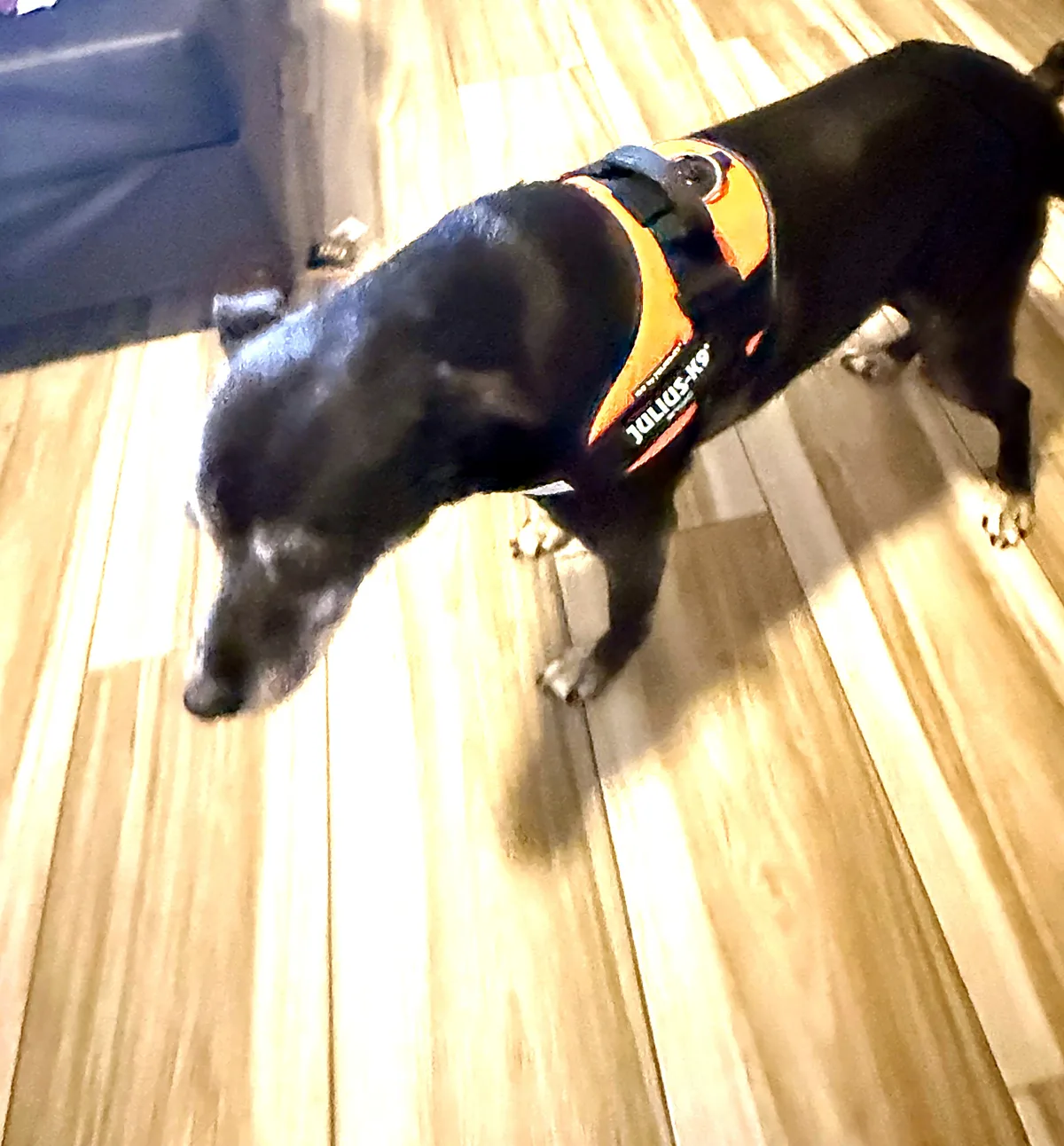
The first fitting is never the dog's favorite moment
I will be honest about how this looks the first time. New harness, new pressure across the chest, a dog that has never worn one - most plant their feet and give you a look. Kai, my Rhodesian Ridgeback mix and the reason Kai's Run exists, was thoroughly unimpressed the first time it went on. Bailey, our older office manager, took it in stride the way she takes everything.
That is normal, and it is worth saying plainly so nobody feels bad watching their own dog sulk. A dog that fights a new harness for a minute is telling me about fit and novelty, not about its character. I never rush it. We put it on, we let the dog move, we watch how it sits - and within a session or two the harness stops registering at all and the dog just gets to work.
Why not a collar
A flat collar is fine for an ID tag and a calm walk. It is the wrong tool for conditioning. A dog driving a slatmill against a tether needs load carried across the chest and sternum, not concentrated on the trachea and the soft tissue of the neck. Repeated pressure there is not something we are willing to build a fitness program on.
The IDC exists to solve exactly that. Broad chest distribution, a spine-protecting saddle, and a control handle - the harness is engineered to take the forces that structured aerobic work actually produces. That is the whole point of running a purpose-built harness instead of whatever is by the door.
How the IDC compares to other harness types
Not every harness is built for the same job, and most owners have one that was chosen for walking, not conditioning. It helps to know where the IDC sits.
Front-clip no-pull harnessesattach the leash at the chest to steer a dog off-balance when it pulls. They are a training aid, and they work - but that deliberate off-balance turn is the opposite of what you want under sustained forward effort. The IDC is a back-clip design that keeps the dog square and lets it drive straight ahead. Reviewers note it still “turns the harness slightly but not as much as most of the other no-pull solutions” - enough control, without fighting the gait.
Thin Y-front and vest harnesses are comfortable for a stroll but often lack a rigid saddle, a real handle, or the webbing to carry repeated load. Flat collars, as covered above, load the throat and have no place in conditioning at all. The IDC was engineered for handlers who put working loads through gear daily, which is why it carries the saddle, the handle, and the buckle strength that a walking harness usually skips.
None of this means your dog needs a new harness to train with us. It means that when we do put our IDC on, we know exactly why it is on there.
Durability and care
Julius-K9 publishes a manufacturer stress test in which “the buckle of the product opened at 300 kg (660 lbs.), but the harness itself did not tear.” Read it for what it is - a manufacturer test, not an independent lab result, and not a rating to hang or lift a dog by. What it tells us is that the webbing and stitching are built well past the loads a conditioning session produces. Combined with reviewers calling it “a durable one” with buckles “strong enough to withstand pulling,” it is a harness we can run week after week without babying it.
Durable still means maintained. The IDC is easy to keep clean - the Oeko-Tex fabric wipes down, and the whole harness hand-washes in cool water and air-dries flat, which is all a saltwater-and-sand climate like ours really asks for. We check the chest strap, buckle, and stitching between dogs, keep the hook-and-loop free of hair so it holds, and retire any harness the moment webbing frays or a buckle stops seating with a clean click. On the truck the gear lives out of direct sun when it is not in use - UV is what actually ages webbing over years, not the running.
If you condition your own dog between visits, the same rules apply: rinse after beach days, store it dry and shaded, and inspect the load-bearing points before every hard session. Treated that way, one IDC outlasts a drawer full of walking harnesses.
Harness questions, answered
More on safety, waivers, and how sessions run is on the main FAQ, and the story behind the gear standards lives on the about page.
Ready to put your dog to work
The harness will ride on the truck with the mill, the tether, and the plan. Kai's Run is not taking dogs yet. Join the launch list to hear first when sessions open.
Sources
- Julius-K9 - IDC Powerharness product page and size chart: julius-k9.com/idc-powerharness
- Julius-K9 - company history, patents, and awards: julius-k9.com/the-company
- Dog Gear Review - independent IDC review: doggearreview.com/review/idc
- Peggy Frezon - independent product review: peggyfrezon.com
Kai's Run is not affiliated with or sponsored by Julius-K9. We are a customer that uses the harness in our conditioning work.