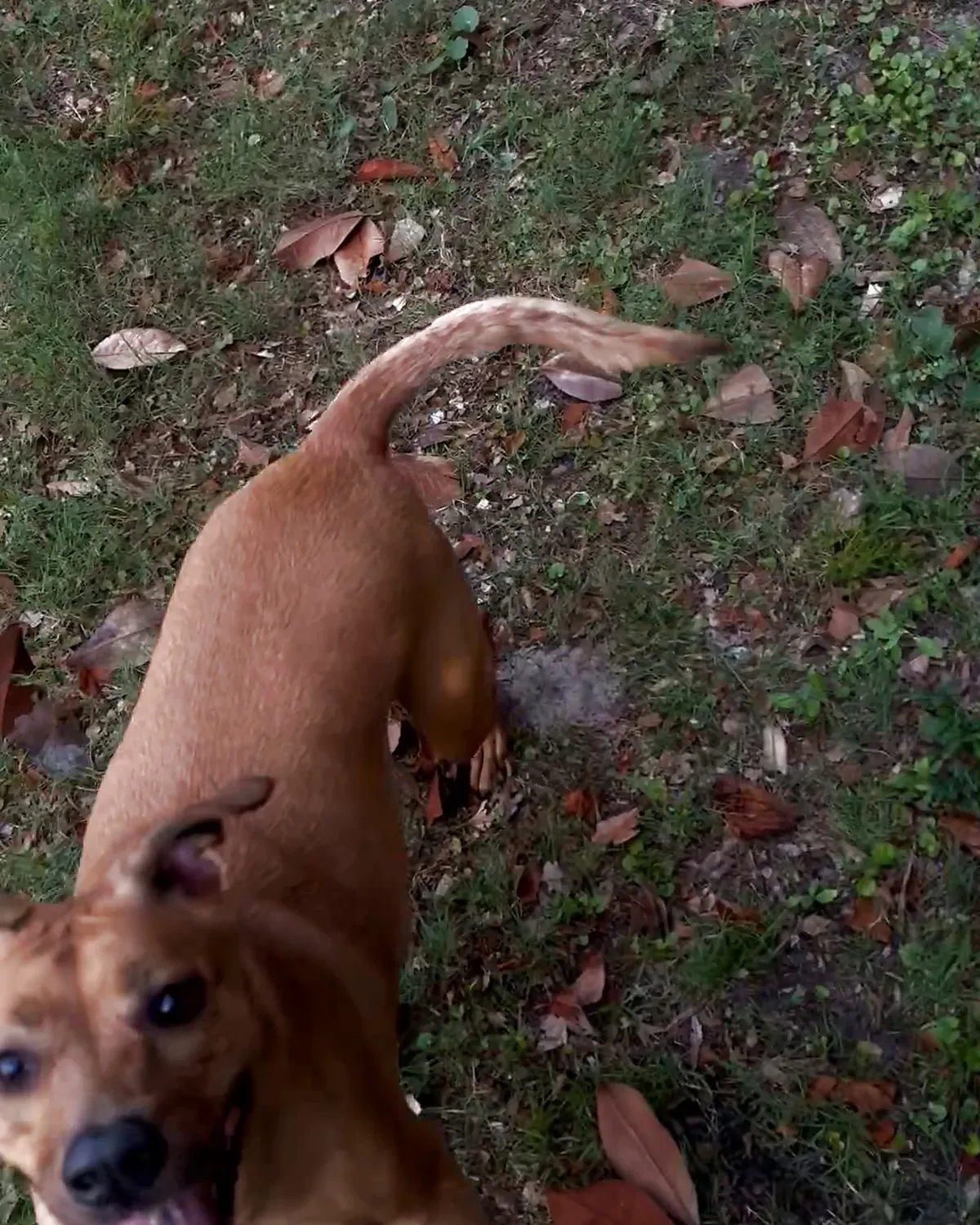
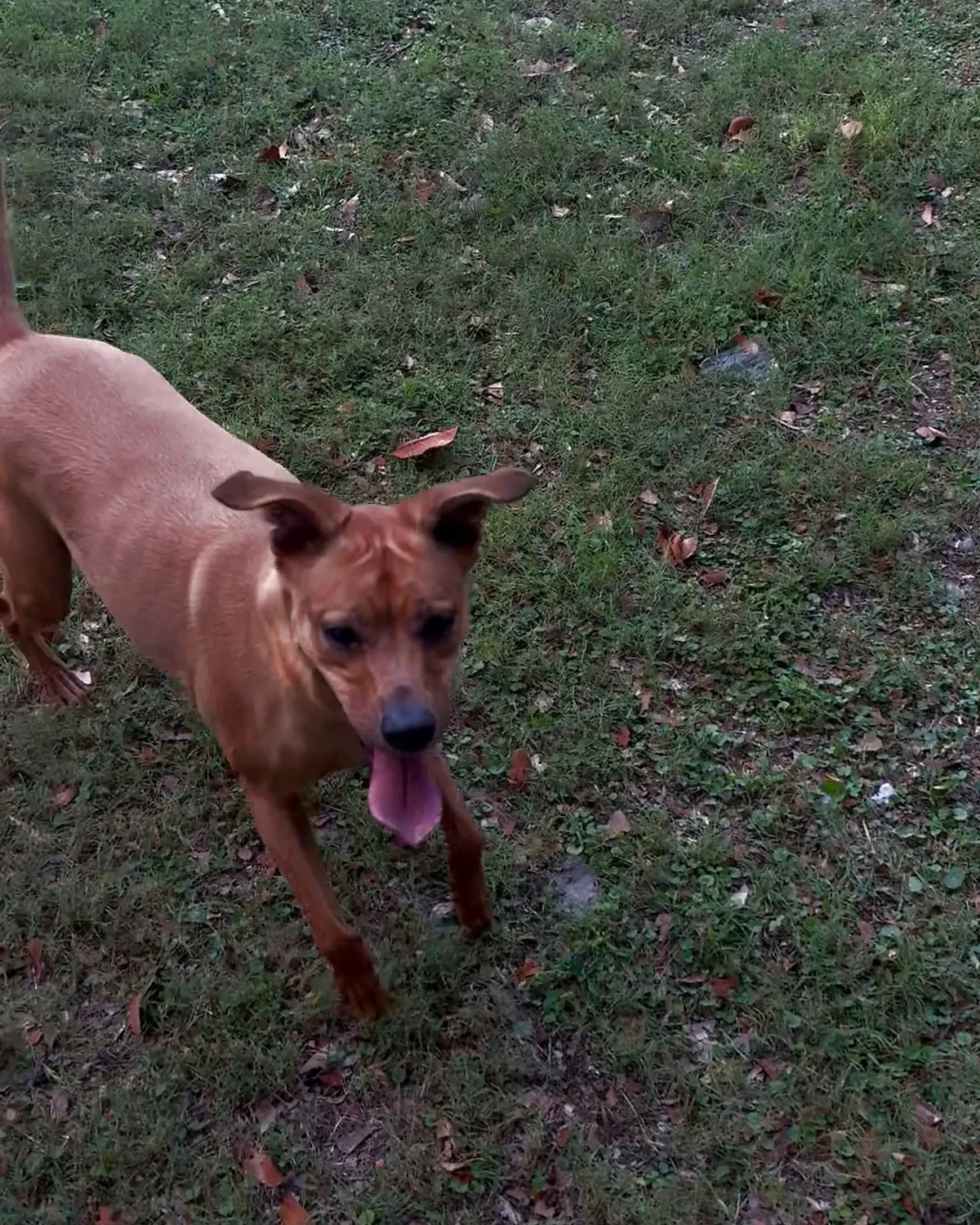
Kai is a Rhodesian Ridgeback mix, and he is the reason this whole thing exists - a high-drive dog is not a badly behaved dog, it is an athlete with no place to spend its engine, and the fix is rarely more obedience. It is a real physical outlet the dog can actually finish.
The first year with Kai nearly broke me. Not because he was mean. He was never mean. He was always on. He would fake calm for ten minutes on the kitchen floor, and the second I relaxed, he would explode off the ground like the couch had insulted him. Baseboards, a remote, one shoe I actually liked - all of it went through his mouth before lunch. Bailey, our older dog, would watch him from her spot by the window with the expression of a manager who did not approve the new hire.
I did what everyone tells you to do. Longer walks. More toys. A trainer for the jumping. Some of it helped at the edges. None of it touched the core problem, because I was treating drive like it was disobedience. It is not. That was the thing nobody said out loud, and it is the thing this entire business is built on now.
What "high drive" actually means
Drive is not energy in the playful, harmless sense. It is a dog bred over generations to work - to chase, to cover ground, to keep going long after a normal dog would lie down. Ridgebacks were built to range across distance and hold up under heat. Plenty of the dogs I see on the Emerald Coast carry some version of that wiring: shepherds, pointers, cattle dogs, the shelter mix that turned out to be far more athlete than anyone planned for. I wrote a longer breakdown of which breeds run hot and why, but the short version is that the wiring does not care that the dog now lives in a house with a fenced yard and a couch.
A high-drive dog wakes up with a full tank and a job description nobody is hiring for. When that energy has nowhere to go, it does not evaporate. It leaks. It comes out as the chewing, the pacing, the barking at the window, the hole in the yard, the dog that cannot settle even when the house is quiet. Owners read that as a behavior problem and reach for correction. The correction fails, because you cannot train away a need. You can only redirect it.
The day the math changed
The thing that finally worked for Kai was a slatmill - a self-powered treadmill with no motor, where the dog sets its own pace and stops whenever it wants. If you have never seen one, I explained exactly what a slatmill is and how it works. The first time Kai got on it and figured out the belt moved when he moved, something clicked. He ran. Not a frantic, anxious run - a steady, chosen, head-down working run. And then, for the first time I could remember, he came inside and slept. Hard. For hours.
That was the whole reveal. The destructive stuff was never a character flaw. It was a symptom of a dog running a daily energy deficit in the wrong direction - too much input, no real output. Drain the tank with honest work and the baseline drops. The same dog who could not hold still becomes a dog who can finally relax, because the engine has somewhere to go. I get deeper into that mechanism in why structured runs beat random play, and it is the single most important thing I learned raising him.
Why a tired dog is an easier dog
People hear "exercise" and picture a behavior fix, like the run is a punishment that beats the bad out of a dog. It is the opposite. A physically satisfied dog has a lower resting arousal level. The startle is smaller. The recovery is faster. The dog that used to lose its mind at the mailman now lifts its head and goes back to sleep. A lot of what gets labeled anxiety or stubbornness is an under-worked nervous system with no off-ramp - I went through that connection in detail in how under-exercise turns into destructive behavior.
This matters even more here in Florida. For half the year the heat quietly deletes the one outlet most owners rely on - the walk turns into a short, panting loop before anyone overheats, and the dog comes back inside with a full tank. That seasonal gap is exactly where the leaking behavior starts. There are real ways to drain a high-energy dog without marching it through 95-degree pavement, and almost all of them come back to intensity and structure rather than distance.
The honest part: your dog will not become Kai
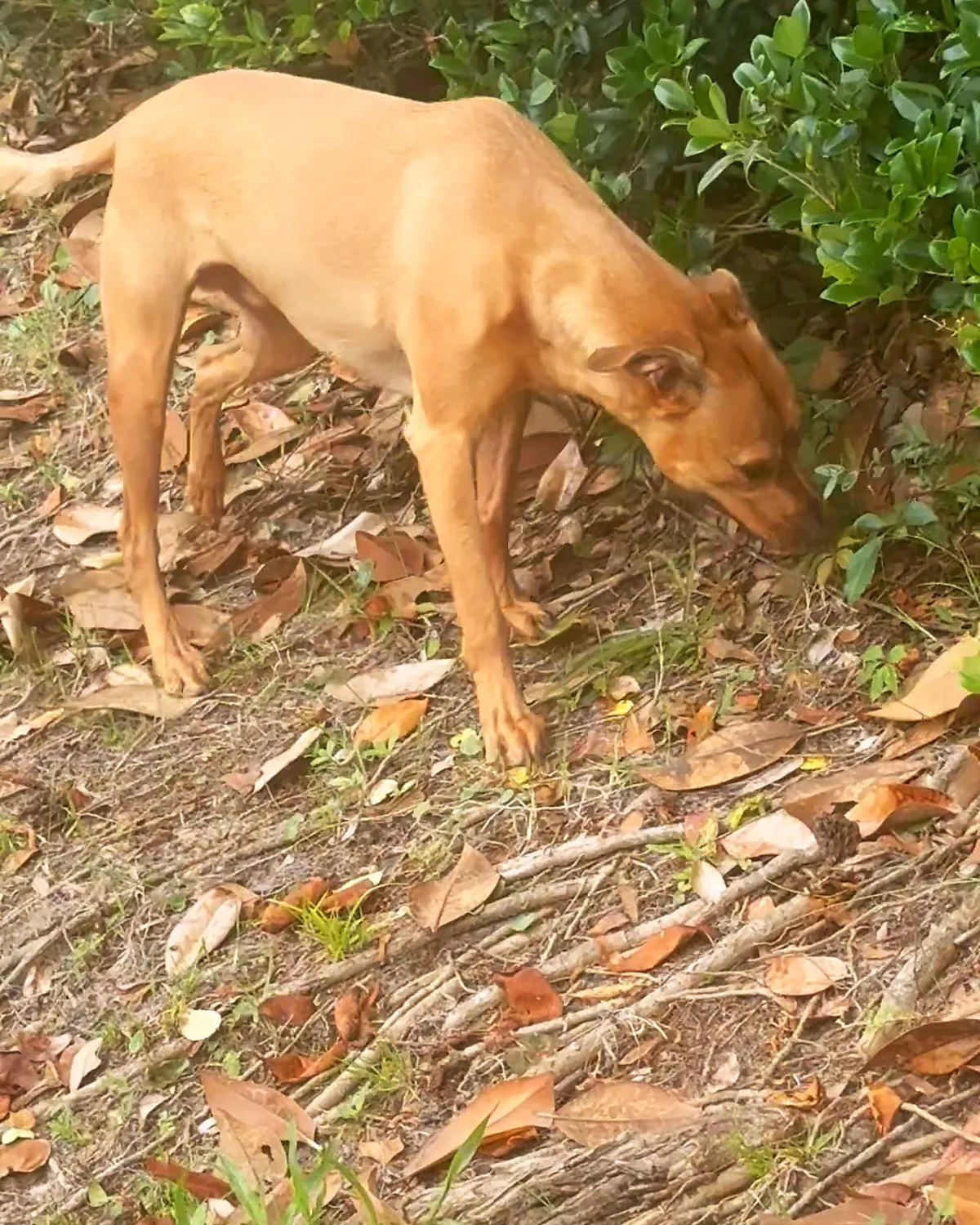
These photos and clips are all Kai - the actual dog, in the actual yard, with no studio and no staging. He is the reference dog on the truck now, the one who shows a nervous newcomer that the surface moves, that stopping is allowed, and that no one is going to wrestle them into speed. People watch him run and ask if their dog will end up looking like that.
The honest answer is no, and that is the point. Your dog will not become a copy of Kai. Your dog will become the best-conditioned version of itself - leaner, calmer, easier to live with, sleeping through the evening instead of patrolling the house. The breed does not matter as much as the wiring, and the wiring needs a real job. If you want the full origin story of how one dog turned into a whole approach, it lives on the about page. And if you are wondering what a first session actually looks like in practice, I walk through it in what to expect the first time on the slatmill.
FAQ
What is a high-drive dog? A dog bred to work - to chase, range, or hold up under sustained effort - that carries that wiring whether or not it has a job. High drive shows up as a dog that cannot seem to settle, not as aggression. It is a need, not a flaw.
Is my dog destructive because it is high drive or because it is anxious? Often both, and they feed each other. An under-worked dog runs an arousal level it cannot bring down on its own, and that comes out as chewing, pacing, and barking. Draining the tank with real movement usually lowers the anxiety too.
Will more obedience training fix a high-energy dog? Training helps with manners, but it does not replace a physical outlet. You cannot train away a need for movement. The dogs that settle are the ones whose energy has somewhere to go first.
What breed is Kai? Kai is a Rhodesian Ridgeback mix - a sighthound-type wiring built for distance and heat, which is a big part of why he needed a real conditioning outlet rather than another walk.
Do I need a high-drive breed for conditioning to help? No. Any dog carrying more engine than its routine spends will benefit. The approach meets the dog where it is and builds from there.
Come meet the original athlete
Kai went from tearing through the house to sleeping hard after a run, and that is the entire idea behind what we do.
Free tool: Dog Exercise Calculator - get the daily target for your own dog's breed group, age, and energy level, the same number that told us walks were never going to be enough for Kai.
Kai's Run is not taking dogs yet. Join the launch list and you will hear first when conditioning opens in Destin, Fort Walton Beach, Niceville, and the rest of the Emerald Coast.